
Helping Your Child Navigate Big Transitions
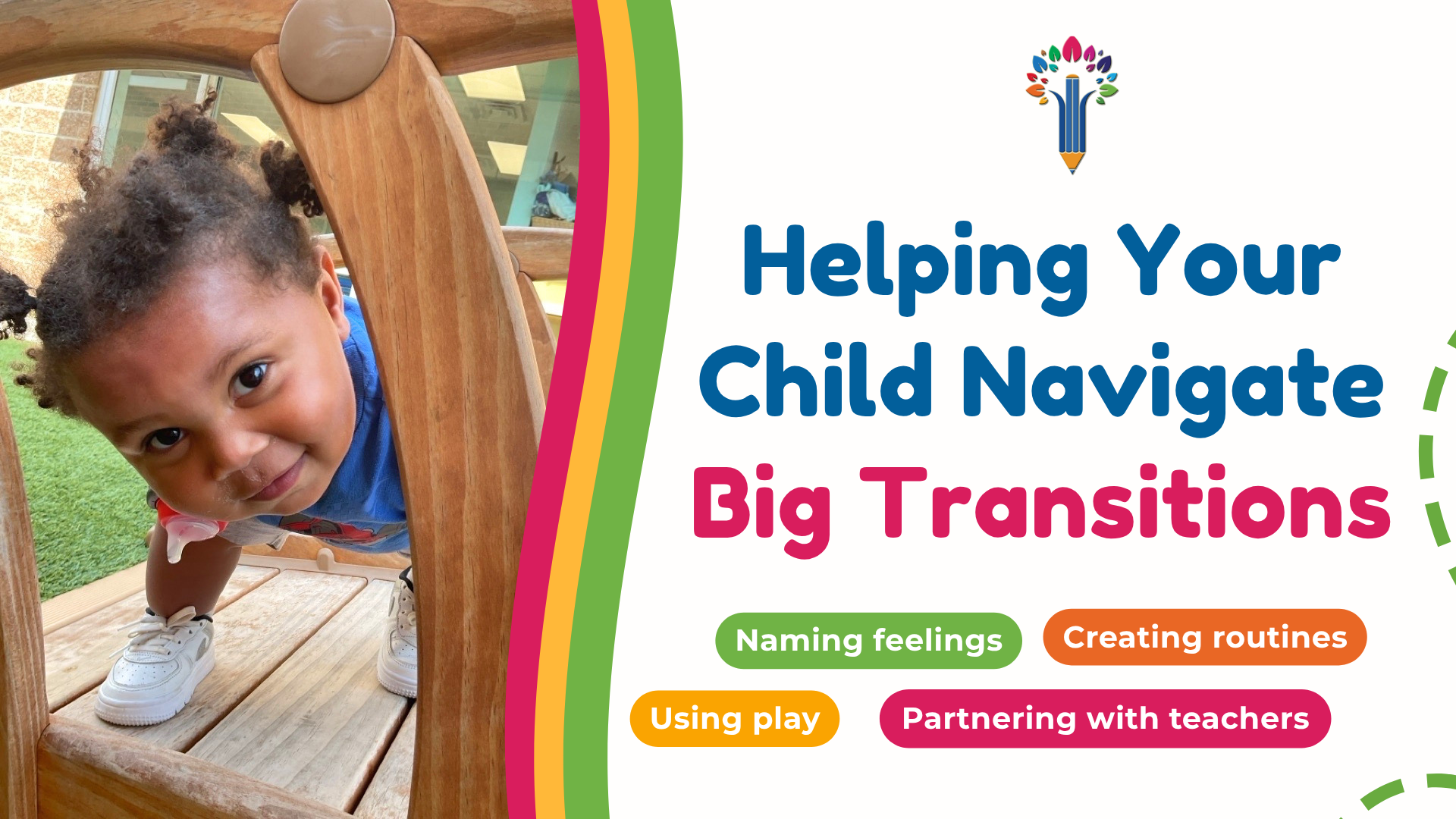
Big changes can bring big feelings. Here’s how families can help young children move through transitions with confidence, connection, and care.
Starting childcare. Moving into a new classroom. Welcoming a new sibling. Saying goodbye to a favorite teacher. Beginning Pre-K or preparing for kindergarten.
For adults, these changes may feel like natural parts of life. But for a young child, even an exciting transition can feel very big.
Young children thrive on familiarity and routine. Knowing what comes next helps them feel safe and secure, so when something changes, children may need extra time, reassurance, and connection as they adjust.
At Open Minds Child Development Center, we believe helping children navigate change is part of nurturing the whole child. Transitions aren't simply something children have to "get through." They're opportunities to develop confidence, resilience, communication skills, and a growing understanding of their emotions.
Remember: Behavior Is Communication
Sometimes children have the words to tell us they're nervous, sad, or unsure. Often, they don't.
Instead, those feelings may show up as:
More tears or clinginess
Difficulty separating from a parent
Changes in sleeping or eating
Increased frustration or tantrums
Asking the same questions repeatedly
Suddenly struggling with something they previously handled independently
Rather than immediately viewing the behavior as a problem, consider what your child may be trying to communicate.
They may simply be saying, "This feels different, and I need help knowing that I'm safe."
Talk About What's Coming
Whenever possible, prepare your child for a transition before it happens.
Keep explanations simple and appropriate for their age. Tell them what will change, but just as importantly, remind them what will stay the same.
For example:
"Next week, you'll move to your new classroom. You'll have a new teacher and some new activities, but we'll still come to Open Minds every morning, and I'll still pick you up after school."
Books, pictures, pretend play, and conversations can also help young children understand an upcoming change.
Create Predictability
When one part of life is changing, familiar routines become even more important.
A consistent morning routine, bedtime routine, goodbye ritual, or after-school tradition gives children something they can count on.
Even something as simple as the same hug and phrase at drop-off each morning can provide reassurance.
Give Feelings a Name
Children are still learning how to understand and express emotions.
Help them develop that language.
"You seem a little nervous about your new classroom."
"You're excited about kindergarten, but you might also feel sad about leaving your friends. You can feel both."
Naming an emotion doesn't make it bigger. It helps children begin to understand what they're experiencing and learn that feelings are something they can work through.
Let Them Know It's Okay to Take Time
Every child responds to change differently.
One child may walk confidently into a new classroom on the first day. Another may need several weeks before the environment feels familiar.
Both can be completely normal.
Try not to compare your child's adjustment to another child's. Instead, look for the small signs of progress: a shorter goodbye, talking about a new friend, participating in an activity, or walking into the classroom with a little more confidence than the day before.
Those small steps matter.
Use Play to Work Through Change
Play is how young children make sense of their world.
You might notice your child pretending to drop a stuffed animal off at school, playing "teacher," packing a pretend backpack for kindergarten, or repeatedly acting out something that recently happened.
Join them.
Pretend play gives children a safe way to explore situations, practice what might happen, and express feelings they may not yet know how to explain.
It's one of the reasons intentional, play-based learning is such an important part of our approach at Open Minds.
Partner With Your Child's Teachers
Families and educators don't have to navigate transitions separately.
Tell your child's teacher about significant changes happening at home. Likewise, ask what they're noticing in the classroom.
Your child's teachers may be able to share strategies that are working during the school day, while information from home can help educators better understand changes in your child's behavior.
When families and teachers communicate, children receive a powerful message: the adults who care about me are working together.
Celebrate Their Growth
Eventually, the unfamiliar becomes familiar.
The classroom that once felt scary becomes their classroom. The teacher they didn't know becomes someone they run to greet. The child who was nervous about Pre-K proudly walks across the graduation stage.
Take time to recognize those moments.
"Remember when you were nervous about your new classroom? Look at everything you can do now."
Helping children recognize their own growth builds confidence for the next transition—and there will always be another one.
Growing Through Change, Together
At Open Minds, our goal isn't to remove every difficult feeling or challenge from childhood. It's to give children the relationships, experiences, and tools they need to move through those moments knowing they are supported.
Because preparing children for their next milestone involves more than academics.
It's helping them learn:
I can try something new.
I can talk about how I feel.
I can ask for help.
I am safe.
I belong.
And I can grow.
Those are lessons children can carry far beyond the classroom.
Is your little one preparing for their next big milestone? Open Minds Child Development Center provides nurturing, intentional, play-based early learning for infants through Pre-K. Schedule a tour and discover a community where children and families learn and grow together.
Ready for Their Next Big Step?
Every milestone is a little easier when your child has a community growing alongside them.
At Open Minds Child Development Center, we partner with families to create a nurturing, inclusive environment where children feel safe to explore, play, build confidence, and prepare for what comes next. From infancy through Pre-K, our intentional, play-based approach supports the whole child—socially, emotionally, physically, and academically.
Now enrolling infants through Pre-K.
Come see what growing, learning, and belonging look like at Open Minds.
Schedule a tour today or call 913-490-3493 to learn more.